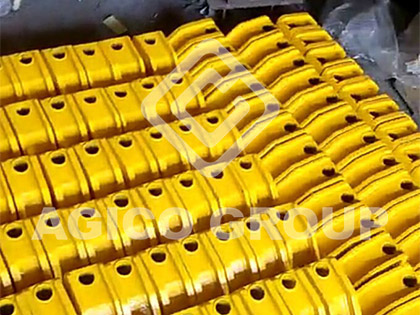
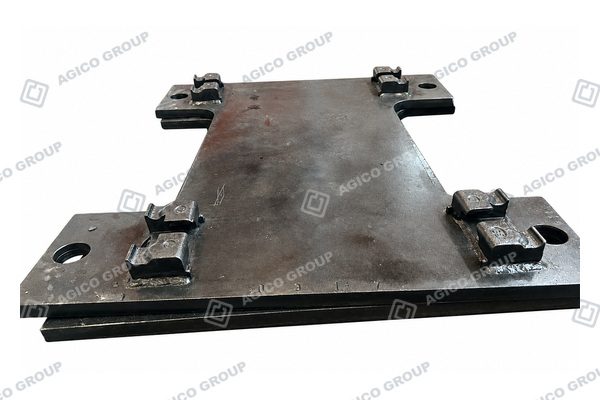
 Turnout Heel Tie Plate
A rail bearing plate supports the rail at a specific position on a turnout bearer. AGICO supplies these plates for railway turnouts. The shape of each rail tie plate depends on its position in the turnout. At a fixed rail seat, the plate provides a bearing surface and locates the fastening hardware. In the switch panel, a slide plate also provides a surface for the moving switch rail. Near the crossing, a check rail plate accommodates both the running rail and its check rail.
Request a QuoteRail Bearing Plate Selection by Turnout Position
| Plate type | Position | Feature to match |
|---|---|---|
| Slide plate | Switch panel | Slide surface and stock rail fastening |
| Rail spacing plate | Switch or heel area | Rail-seat positions and offset |
| Switch heel plate | Heel of the switch rail | Heel assembly and fixing pattern |
| Flat tie plate | Closure rail area | Rail seat and bearer fixings |
| Check rail plate | Opposite the crossing | Check rail support and flangeway geometry |
Need A Fast Inquiry for Turnout Bearing Plate?
Include the turnout drawing number, rail section and plate position in your enquiry.
Bearing Plate Types In Railway Track
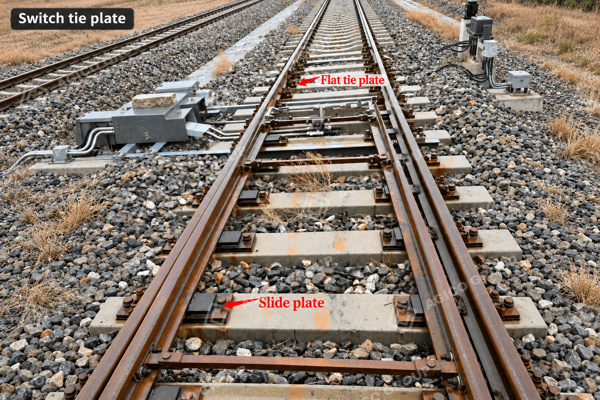
Slide Base Plates
The stock rail stays in position while the switch rail moves across the slide surface as the route changes.The slide base plate fastens rail where it supports the moving rail. The tie plate types includes roller slide plates, anti-lift slide plates and slide plates with a rail brace.
Rail Spacing Plates
A rail spacing plate is located in the switch or heel area and the relative positions of the rail seats. Please provide AGICO the turnout layout, plate position and offset shown on the drawing.
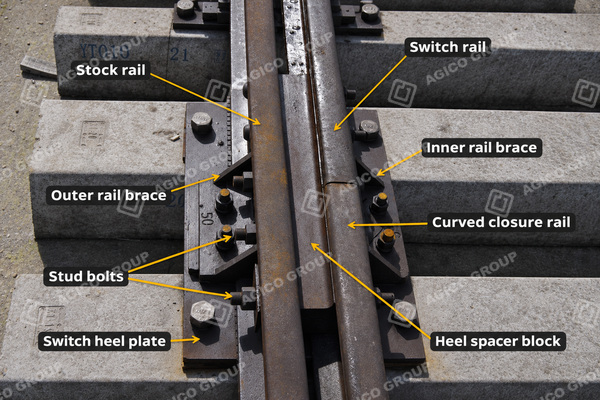
Switch Heel Tie Plates
At the heel of the switch rail, the tie plate supports the rail assembly where the switch rail meets the closure rail. you can see the stock rail, switch rail, rail braces, bolts and heel plate. When specifying this part, use the heel assembly drawing and distinguish the switch heel from the heel of the crossing.
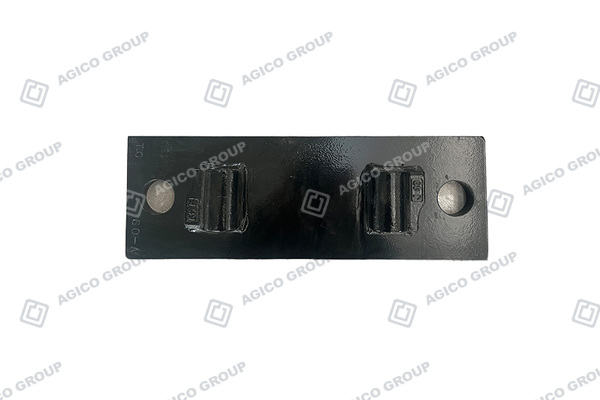
Flat Rail Tie Plates
A flat tie plate provides a fixed seat beneath the rail in the closure area of the turnout. Its bearing area distributes the rail load to the bearer, while the fastening arrangement helps hold the rail in position. Check the rail-foot width, the position of the shoulders and the bearer fixing holes against the plate drawing.
Check Rail Bearing Plates At the Turnout
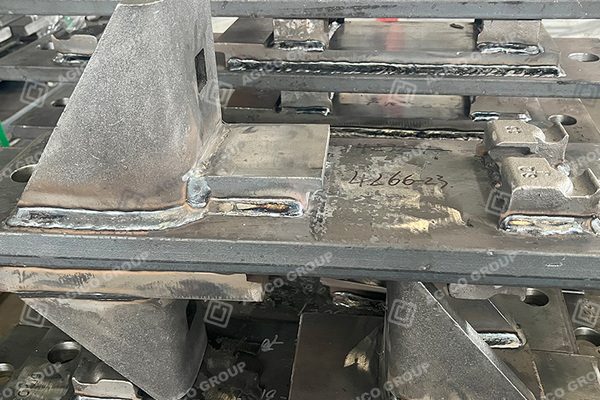
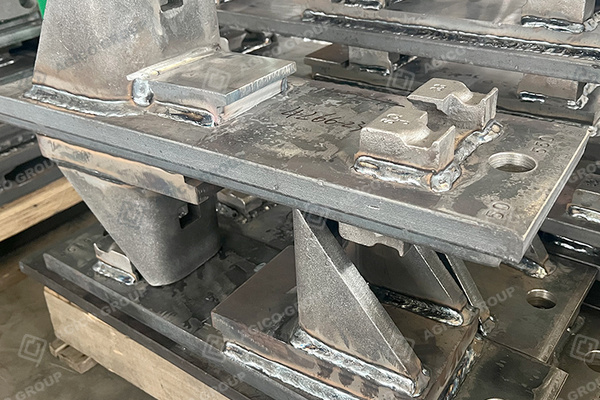
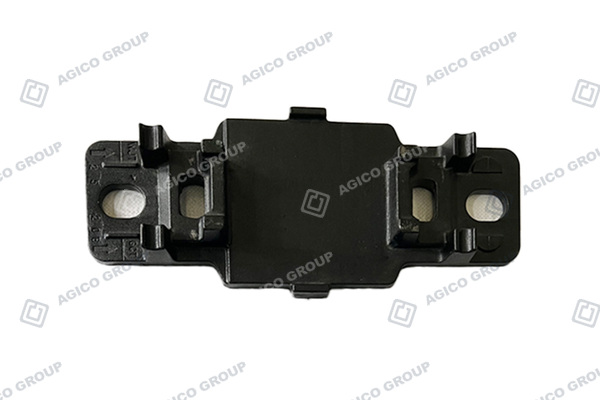
The check rail plate supports the running rail and the adjacent check rail on a turnout bearer. Their relative positions define the flangeway beside the running rail. The brace and fastening seats therefore matter as much as the outer plate dimensions when identifying a replacement.
Check Rail Tie Plates
At the crossing, the check rail baseplate supports the running rail and the adjacent check rail. Compare the brace and fastening shoulder with the assembly drawing.
Related Fastening Baseplates
Compare the rail seat, fastening shoulders and fixing holes with those shown on the project drawing.
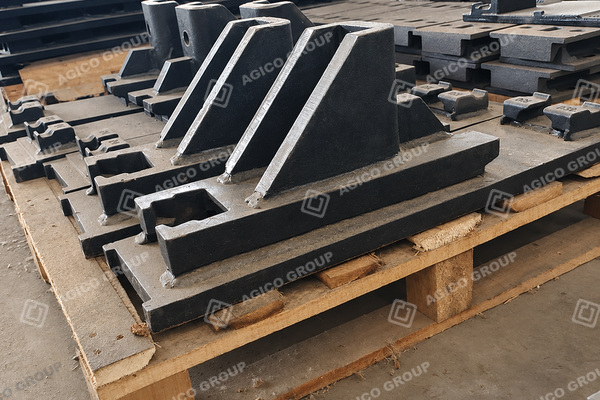
The rail tie plate carries vertical and lateral forces transmitted through the rails, together with forces from the fastening assembly. On a welded plate, the brace attachment is a distinct feature to identify in the drawing and inspection requirements. The examples shown here have a welded upright and a separate fastening shoulder.
Rail Section
P43, P50 and P60 are rail designations listed for the check rail plate family. Include the full rail section and the check rail profile in an enquiry. Even within one rail section, the bearer fixing pattern, brace position and required flangeway depend on the turnout design.
How do fastening baseplates differ?
Fastening baseplates used in track systems such as WJ-7 and WJ-8 belong to a related product family. Their rail pads, clips, anchors and insulating components work as an assembly. If a project uses one of these systems, identify it separately from the position-specific plates in the turnout schedule.
Rail Bearing Plate Manufacturing Process
Steel Billets and Press Equipment
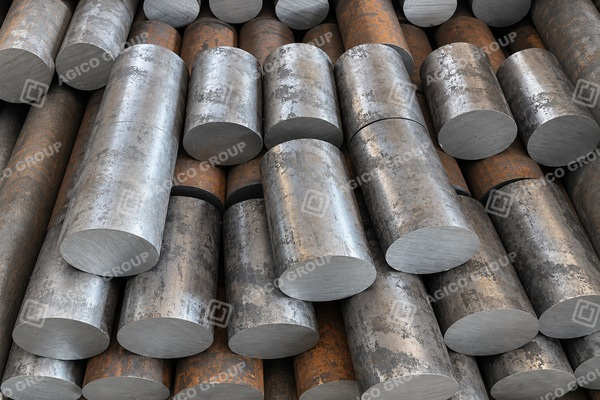
Billet inspection
Check incoming steel billets for surface defects and dimensional conformity. Steel billets with unacceptable defects shall not be used.
Heating and rolling
Heat the billets to rolling temperature and remove oxide scale with high-pressure water. Roll the steel in multiple passes to form the required cross-section and develop continuous metal flow along the profile.
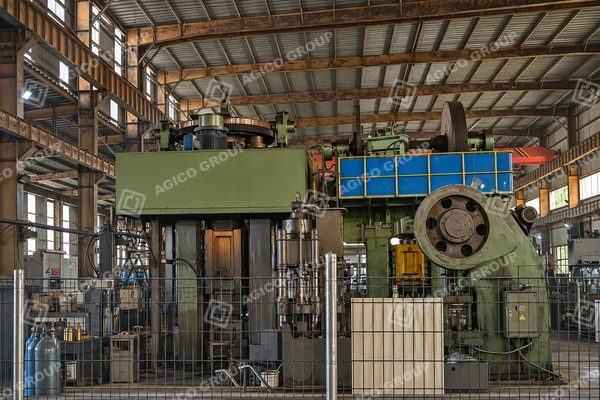
Cooling and straightening
Cut the rolled sections to intermediate lengths while hot and cool them under controlled conditions on a cooling bed. Straighten the sections and inspect their profile, flatness and surface condition.
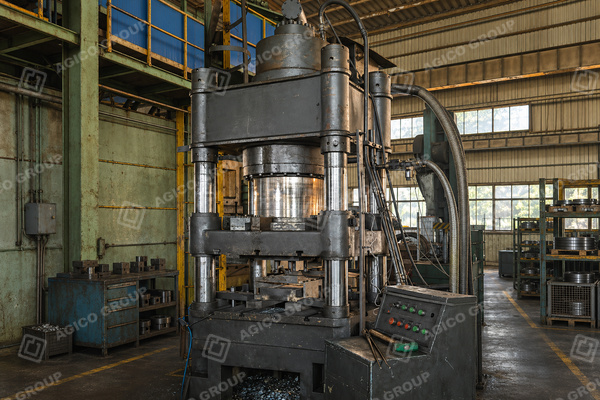
Sawing, punching and flattening
Saw the sections to final length and reheat them. Use a 4-column hydraulic press with punch tooling to form the mounting holes, then flatten the tie plates to correct local distortion.
Quenching and tempering
Quench and temper the rail tie plates to achieve the specified balance of strength, hardness and toughness.
Dimensional Checks on Finished Bearing Plates
Check the finished plate against the drawing for overall dimensions, rail seat width, mounting-hole size and position, and flatness.
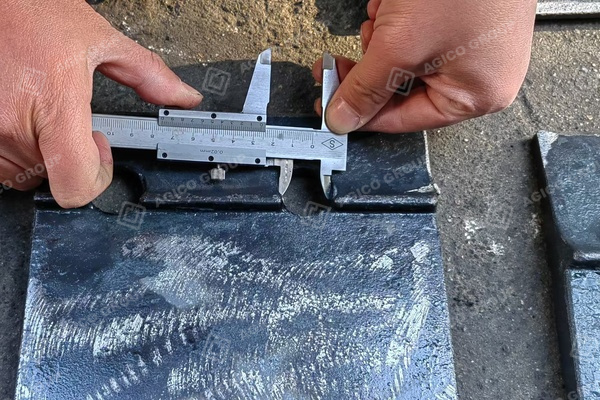
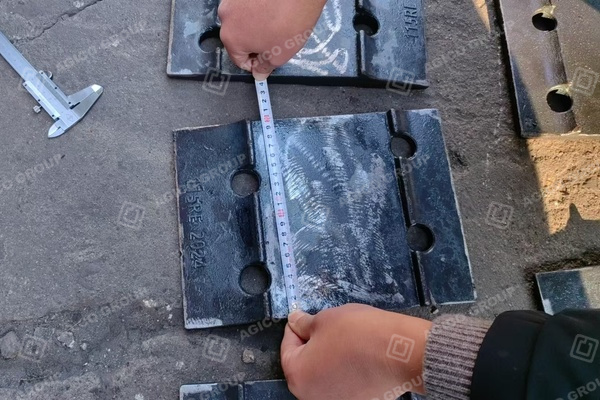
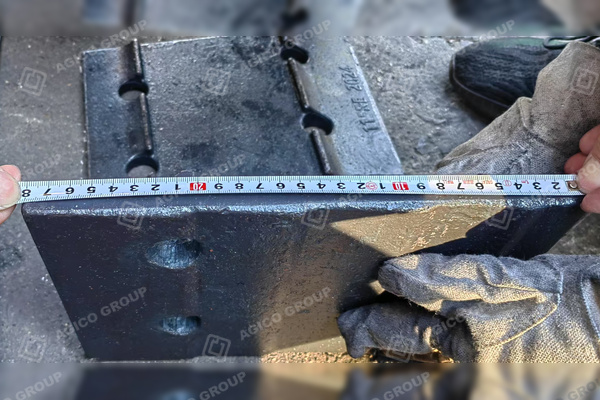
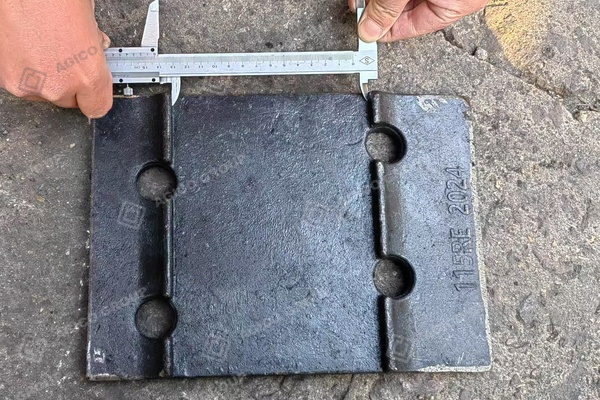
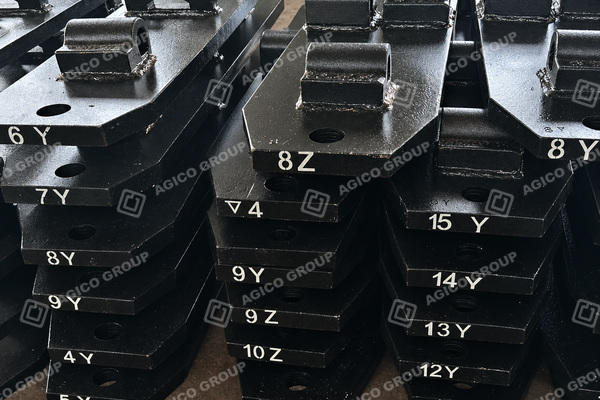
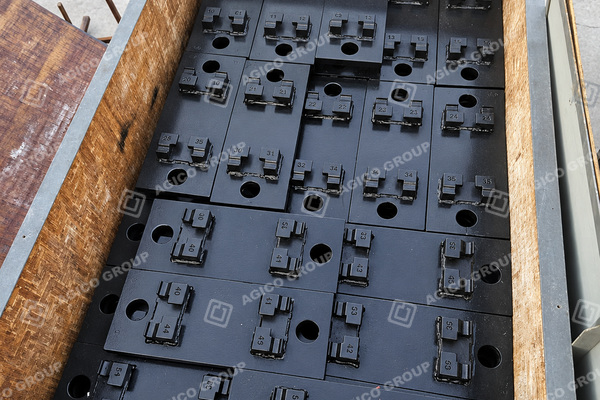
Check rail bearing plates and order identification
How to Specify a Rail Bearing Plate
To order rail bearing plates for a complete turnout, provide the plate schedule and quantities by position. For a single replacement, include the plate mark and a view of its installed location. If 2 plates have similar outlines, the drawing number and revision provide a clearer purchasing reference.
| Enquiry item | Details to provide |
|---|---|
| Turnout identification | Turnout drawing number, revision, hand and plate position |
| Rail interface | Running rail section and the switch or check rail profile where applicable |
| Plate geometry | Length, width, thickness, rail-seat spacing and hole centres with units |
| Fastening assembly | Clip or bolt type, anchor layout, bearer type and associated pads |
| Material and acceptance | Material grade, finish, weld or inspection requirements as specified |
| Order scope | Quantity per plate mark and whether loose fasteners are included |
Rail Bearing Plate Ordering Questions
Can flat plates and slide plates be ordered together?
Yes, they can be listed on the same enquiry. Give each plate its own drawing reference and quantity. Identify which positions require a sliding surface and whether the assembly includes a roller, anti-lift feature or rail brace.
Is the rail designation enough to select a check rail plate?
A rail designation identifies only one interface. Supply the check rail arrangement, required flangeway and bearer fixing details so the plate can be checked against the complete assembly.
Request a quotation
Send the turnout drawing, plate schedule and rail profiles with the required quantities. Mark the relevant plate on an assembly view if its part number is unknown.
Related content Why Slide Baseplates Fail in Railway Turnouts