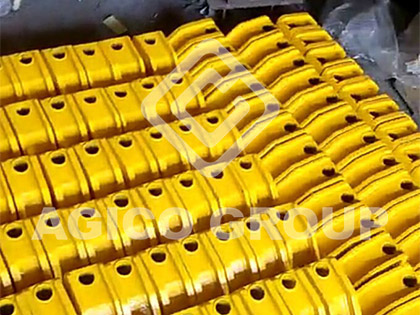
33C1 Check Rail for Railway Turnouts
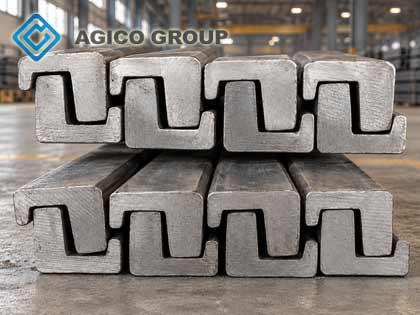
33C1 check rail is a special rail section used in turnouts, crossings and other track locations where controlled wheel guidance is required. Installed beside the running rail or near a crossing nose, it helps restrain lateral wheelset movement and guides the wheel flange through critical track geometry.
AGICO supplies 33C1 check rails to EN 13674-3, approved customer drawings and project-specific requirements. Available services can include cut-to-length supply, drilling, milling and end machining, subject to technical review.
- Profile: 33C1, also historically designated UIC33, U69 or RL 1-60
- Applications: railway turnouts, crossings, frogs and compatible special trackwork
- Processing: cutting, drilling, milling and drawing-based end machining
- Documents: inspection records and material documentation according to the agreed order scope
Request a 33C1 Check Rail Quote
33C1 Check Rail Specifications
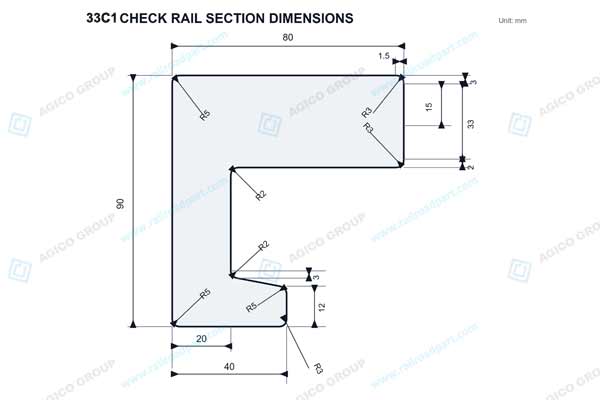
The following product data combines the supplied project document with the dimensional and tolerance values extracted from the provided source image. The image records a mass of 32.89 kg/m. Final dimensions, material grade, tolerances and acceptance criteria must be confirmed against the applicable standard edition, approved drawing and purchase specification.
| Parameter | Specification |
|---|---|
| Rail profile | 33C1 |
| Previous designations | UIC33 / U69 / RL 1-60 |
| Product type | Railway check rail |
| Applicable standard | EN 13674-3 or approved project specification |
| Typical applications | Turnouts, crossings, frogs and wheel-guidance systems |
| Steel grade | According to the applicable standard and purchase specification |
| Length | Standard or customized length, subject to availability |
| Hole pattern | According to approved customer drawing |
| End configuration | Square-cut, angled, flared or drawing-based |
| Optional machining | Cutting, drilling, milling and end processing |
33C1 Section Dimensions and Permissible Deviations
The values below are an English transcription of the table in the supplied image. Dimensions and permissible deviations are shown in millimetres unless otherwise stated.
| Item | Nominal Dimension | Permissible Deviation |
|---|---|---|
| Section top width | 80 mm | ±1.0 mm |
| Section height | 93 mm | ±1.0 mm |
| Section base width | 40 mm | ±1.0 mm |
| Section web thickness | 20 mm | ±0.75 mm |
| Section head thickness | 33 mm | ±0.5 mm |
| Section base thickness | 12 mm | ±0.5 mm |
| Uniform curvature | - | ≤ total length / 1,000 |
| Full-length twist | - | ≤ total length / 10,000 |
Mass and Metal Distribution
| Item | Section | Value | Unit |
|---|---|---|---|
| Mass per metre | - | 32.89 | kg/m |
| Metal distribution | Head | 67.61 | % |
| Web | 19.03 | % | |
| Base | 13.36 | % |
Technical note: The source image reports 32.89 kg/m. Do not substitute a catalogue value without confirming the governing drawing and required standard edition for the order.
What Is a 33C1 Check Rail?
A check rail works with the running rail and crossing geometry to control the lateral position of a wheelset. At a railway turnout or crossing, it can restrain the back of the wheel flange so that the opposite wheel follows the intended path through the crossing area. Correct flangeway, relative rail height, fastening arrangement and transition geometry are all controlled by the track design.
In European and British railway terminology, check rail is widely used for this wheel-guidance component. In other markets, a comparable turnout component may be called a turnout guard rail or frog guard rail. A bridge guard rail has a different derailment-containment function, so the final name and application must be confirmed against the project drawing.
EN 13674-3 Check Rail
EN 13674-3 covers check rails used in railway applications. Under this designation system, 33C1 corresponds to the earlier names UIC33, U69 and RL 1-60. Related check-rail profiles include 36C1, 40C1, 47C1 and 48C1.
Profile names alone do not prove interchangeability. Before production or replacement, confirm the cross-section, steel grade, dimensional tolerances, running-rail interface, flangeway, hole arrangement, end geometry and inspection requirements.
Where Are 33C1 Check Rails Used?
Railway Turnouts
In turnout assemblies, a check rail works beside the running rail, switch components and crossing components to maintain the required wheel path. The exact position and fastening method depend on the turnout design and railway system.
Railway Crossings and Frogs
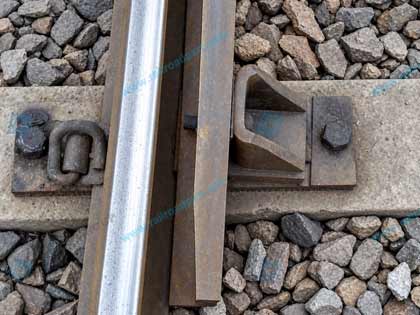
At crossings and frogs, the check rail helps guide wheelsets through the intersecting rail paths and protects critical crossing components from unintended wheel contact. Compatibility with the crossing geometry must be verified before ordering.
Special Trackwork
Industrial railways, mining railways, metro systems and other dedicated networks may use check rails designed for their vehicle, gauge and operating conditions. These applications remain drawing controlled.
Replacement and Maintenance
Replacement check rails should be specified from the approved original drawing, a verified section profile or measured sample information. Existing hole positions, wear condition, end geometry and installation interfaces should be checked before manufacturing a replacement.
Installation and Fastening Checks
Installation work should follow the approved track drawing and the responsible railway authority's requirements. The installation team should confirm flangeway, relative rail height, support spacing, fastener condition and the orientation of all machined ends before final tightening.
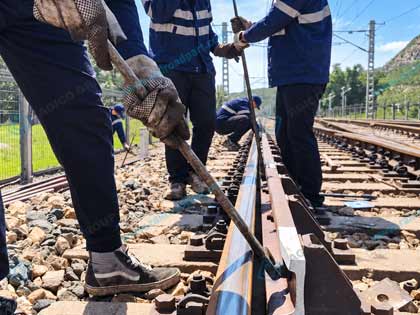
Bolt condition and fastening stability affect the check rail position under service loads. Check the specified bolt grade, locking method, tightening procedure and any insulation requirements before acceptance.
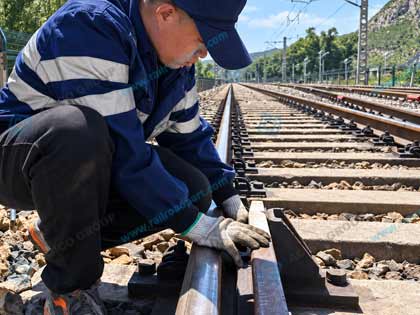
Inspection and Maintenance
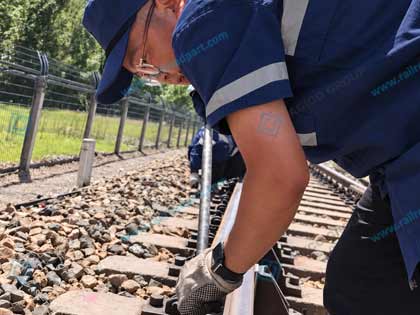
Routine inspection should consider profile wear, surface damage, fastening condition, rail alignment, flangeway and movement at the support interface. Inspection intervals and rejection limits must follow the infrastructure owner's maintenance rules rather than a general web-page value.
How to Specify a Turnout Check Rail
For identification and quotation, provide the following information:
- Required profile and applicable standard edition
- Steel grade and material acceptance criteria
- Individual length, quantity and handedness
- Hole diameters, spacing, datums and tolerances
- End geometry and machining drawing
- Turnout, crossing, frog or other application
- Required material certificates and inspection records
- Delivery destination and packing requirements
If a complete specification is unavailable, send the existing drawing, a verified dimensional sketch or sample details for an initial technical review.
Why Source 33C1 Check Rails from AGICO?
AGICO offers railway rail, rail fastening parts and track-component supply through project-specific sourcing. For 33C1 check rail orders, the scope can include profile review, drawing-based processing, dimensional inspection, export packing and delivery coordination. Availability, processing capability, documentation and lead time are confirmed during quotation.
33C1 Check Rail FAQ
Are 33C1 and UIC33 the same rail profile?
UIC33 is a previous designation associated with the 33C1 check-rail profile. The current order should state 33C1 and the applicable EN 13674-3 edition, while also confirming the drawing, material and acceptance requirements.
Can the check rail be supplied with drilled holes?
Yes, subject to drawing review. Provide hole diameter, spacing, reference datums, tolerance and rail orientation.
Can AGICO machine special rail ends?
Angled, flared or other drawing-based end configurations can be reviewed. Manufacturing feasibility and inspection criteria must be agreed before production.
What information is required for a replacement check rail?
Provide the profile, overall length, running-rail interface, handedness, hole centres, flangeway, end geometry, photographs and the governing drawing or a measured sketch.
Request a 33C1 Check Rail Quotation
Send us the required rail profile, standard, length, quantity, machining drawing and delivery destination. Our team will review the technical requirements and prepare a project-specific supply proposal.