Grooved Rail for Tramway and Urban Light Rail
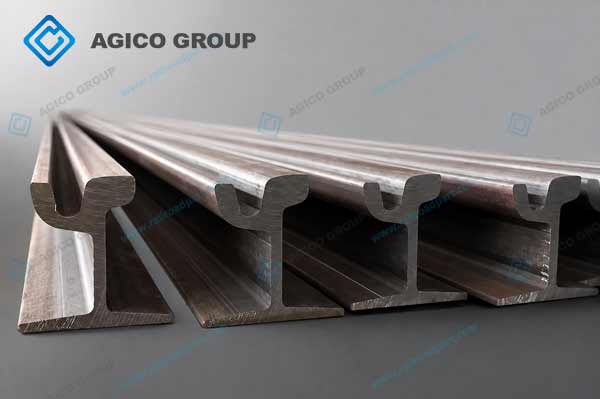
Grooved rail is a special-purpose steel rail developed for tramways, street-running light rail and embedded urban track. Its asymmetric head incorporates a continuous flangeway that guides the wheel flange while allowing the running surface to be installed close to the surrounding pavement level. This configuration provides a practical interface between rail traffic, road vehicles, cyclists and pedestrians in shared urban corridors.
We supply grooved rail profiles for new tramway construction, track renewal, crossings, curves, depots and embedded track systems. Available supply can be matched to the required profile, steel grade, manufacturing standard, rail length, heat-treatment condition and inspection documentation. Final availability and acceptance criteria should always be confirmed against the project specification before ordering.
What Is Grooved Rail
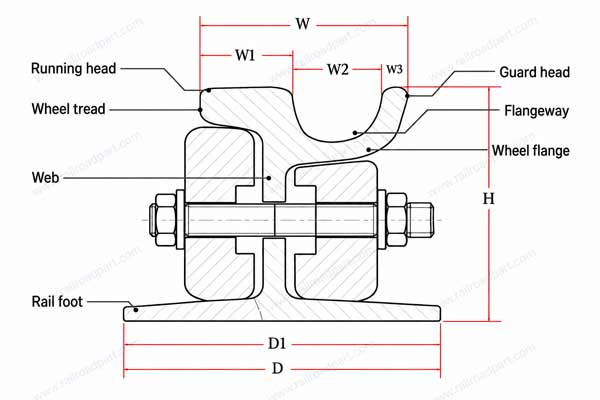
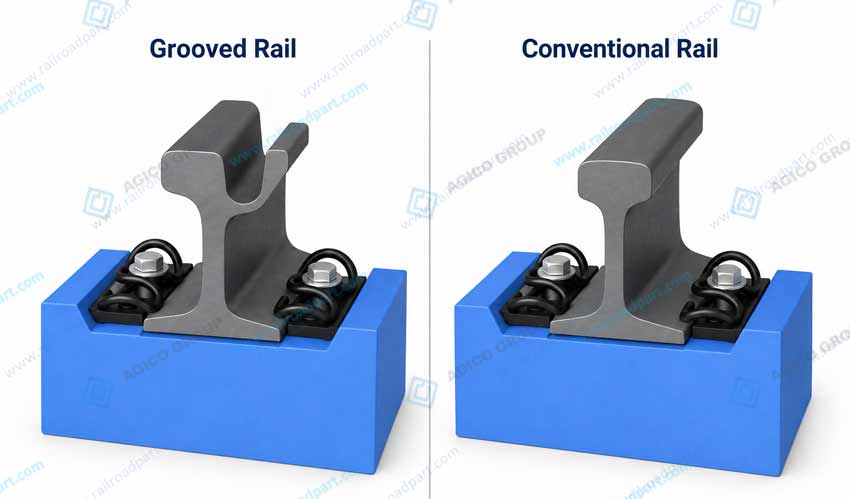
Unlike a conventional flat-bottom rail, a grooved rail has a running head and a raised guard or lip separated by a flangeway. The wheel tread runs on the rail head, while the wheel flange travels inside the groove. The rail can therefore be embedded in concrete, asphalt, paving blocks or an elastomer-supported track system without leaving a conventional open railway track profile across the road surface.
The shape is deliberately asymmetric and is more difficult to roll than an ordinary railway rail. The head, groove, web and foot must be controlled as a continuous hot-rolled profile so that wheel guidance, weld alignment, pavement integration and track gauge can be maintained throughout the line.
Why Grooved Rail Is Used
- Pavement integration: the rail can be embedded close to the road surface for mixed-traffic and pedestrian areas.
- Reliable wheel guidance: the continuous groove accommodates the wheel flange through straight track, curves and special trackwork.
- Urban ride quality: a correctly selected, welded and supported rail contributes to stable running and controlled vibration.
- Lower visual obstruction: the embedded profile avoids the prominent open track form of conventional railway rail in city streets.
- Flexible applications: grooved rail is used in tramway main lines, stations, intersections, depots, turnouts and other special track structures.
Noise and maintenance performance depend on the complete track system, including rail support, resilient elements, wheel condition, welding quality, drainage, lubrication and pavement construction. The rail profile alone does not determine the final acoustic or lifecycle result.
Grooved Rail Supply
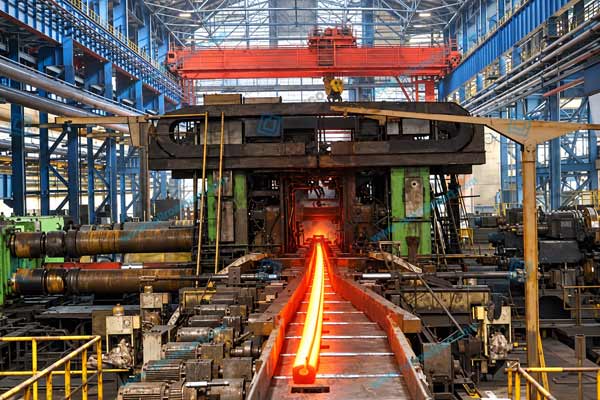
Our supply program is intended for tramway contractors, track-system integrators, rolling-stock interface teams, municipal transport authorities and distributors. Project supply can cover straight rails and, where separately agreed, value-added processing and site-support services.
Supply Options
- Profiles: 59R1, 59R2, 60R1 and 60R2, subject to mill capability and order quantity.
- Standards: Chinese YB/T 4653 or EN 14811, as specified in the purchase contract.
- Steel grades: U75V for Chinese-standard supply; EN grades such as R260 or a specified heat-treated grade when available.
- Condition: hot-rolled or heat-treated rail according to the required wear resistance and standard.
- Lengths: common commercial lengths include 12 m, 18 m and up to 25 m, depending on profile, mill and transport limits.
- Inspection documents: mill test certificate and, when contractually required, EN 10204 type 3.1 or third-party witnessed documentation.
- Optional project services: rail bending, welding coordination, intersection temporary bridging, delivery planning and maintenance support, subject to a separate technical and commercial agreement.
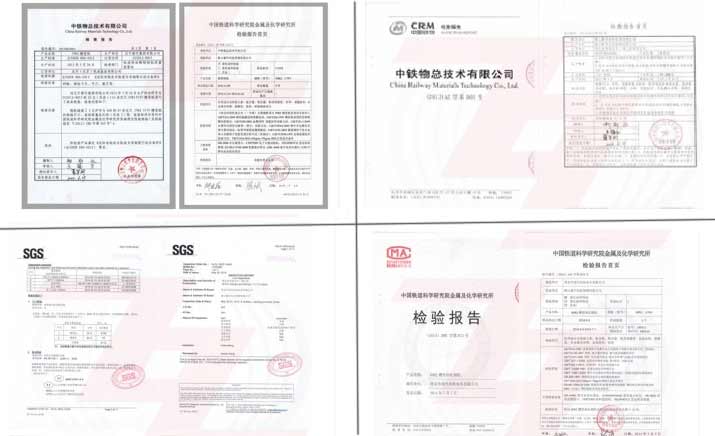
The supplied source material reports development of 59R2 and 60R2 grooved rails in 2012, testing by several domestic and international inspection organizations, and application in multiple Chinese tram projects. For public project references, certification statements and performance claims should be supported by current, publishable test reports and customer authorization.
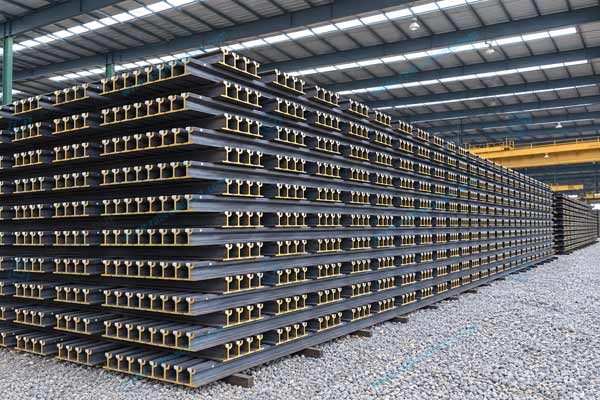
Information Required for a Quotation
- Rail profile and applicable drawing revision
- Standard and steel grade
- Hot-rolled or heat-treated condition
- Rail length, quantity and delivery schedule
- Dimensional tolerance group and straightness requirements
- End condition, drilling, bending or special machining requirements
- Welding method and compatibility requirements
- Inspection certificate, ultrasonic testing and third-party inspection requirements
- Destination port or project delivery location
Common Models of Grooved Rails
The 59R and 60R families are widely used for modern tramway and embedded light-rail construction. The R1 and R2 suffixes identify different head and groove geometries; they are not quality grades. Ri designations are commonly used historical or commercial profile names.
| Model | Common designation | Typical use and selection note |
|---|---|---|
| 59R1 | Ri59 / Ri59-R10 | Urban tram and embedded track where the 59R1 wheel–rail interface is specified. |
| 59R2 | Ri59N / Ri59-R13 | Widely used embedded tram profile with a wider groove than the 60R2 family. |
| 60R1 | Ri60 / Ri60-R10 | Approximately 60 kg/m profile with R1 head and groove geometry. |
| 60R2 | Ri60N / Ri60-R13 | Common modern tram profile used in mixed-traffic and embedded track systems. |
A profile must be selected from the vehicle wheel profile, flange geometry, minimum curve radius, wear strategy, special-trackwork design and project standard. Similar overall height or weight does not make two profiles interchangeable.
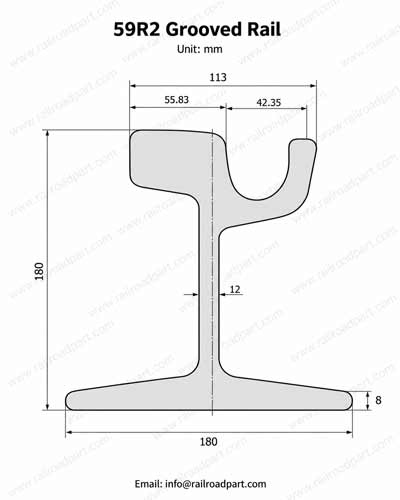 59R2 Grooved Rail Profile
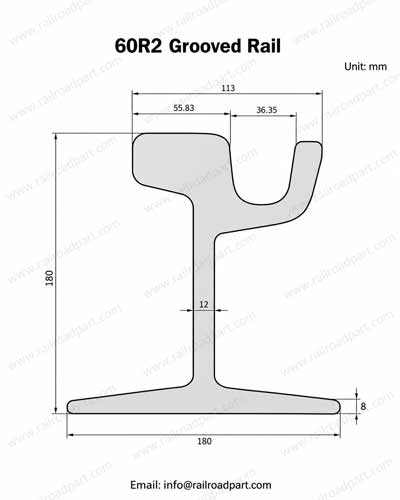 60R2 Grooved Rail Profile
Full Grooved Rail Specifications
The following values consolidate the supplied product information and commonly published profile data. Values may vary slightly between drawing editions and manufacturers. The approved project drawing and purchase specification govern production and acceptance.
| Parameter | 59R1 | 59R2 | 60R1 | 60R2 |
|---|---|---|---|---|
| Standard profile | EN 14811 | EN 14811 | EN 14811 | EN 14811 |
| Nominal mass | 58.96 kg/m | 58.14–58.20 kg/m | 60.48–60.59 kg/m | 59.75 kg/m |
| Rail height H | 180 mm | 180 mm | 180 mm | 180 mm |
| Foot width B | 180 mm | 180 mm | 180 mm | 180 mm |
| Overall head width C | 113 mm | 113 mm | 113 mm | 113 mm |
| Running-head width C1 | 56 mm | Approx. 55.8 mm | Approx. 55–56 mm | 55.83 mm |
| Groove width C2 | 42 mm | Approx. 42.35–42.50 mm | 36 mm | Approx. 36.34–36.35 mm |
| Nominal web thickness | Drawing-specific | Approx. 13 mm | Drawing-specific | Approx. 13 mm |
| Typical commercial length | 12–25 m | 12 / 18 / 25 m | 12–25 m | 12 m; longer by agreement |
| Typical material option | R260 or agreed grade | U75V / agreed EN grade | R260 or agreed grade | U75V / agreed EN grade |
Notes: “R260” and “U75V” belong to different material-designation systems and should not be treated as automatically equivalent. The designation “900A” appears in older commercial literature and should only be used when it is explicitly required by the contractual standard or approved material specification.
Key Technical and Ordering Requirements
- Chemical composition and mechanical properties appropriate to the selected grade
- Brinell hardness and, for heat-treated rail, the specified hardened-zone performance
- Profile dimensions, asymmetry, groove geometry and mass per metre
- Length tolerance, straightness, twist and end squareness
- Surface quality, internal soundness and ultrasonic testing
- Identification marking, traceability and inspection documentation
- Compatibility with the approved wheel profile, weld procedure and turnout design
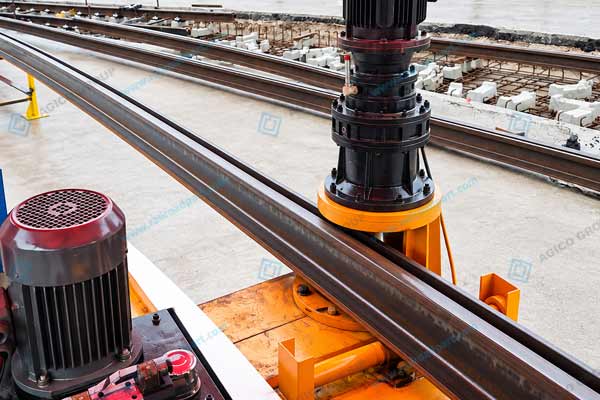
Grooved Rail Standard - YB/T 4653 and EN 14811
The phrase “GB standard grooved rail” is often used commercially to mean Chinese-standard grooved rail. Strictly speaking, the principal Chinese product document is the metallurgy industry standard YB/T 4653-2018, not a GB national standard. EN-standard rail is governed by EN 14811:2019 for current European procurement unless the contract explicitly calls for an earlier edition.
| Comparison item | Chinese standard supply | EN standard supply |
|---|---|---|
| Primary product standard |
YB/T 4653-2018, Grooved rail for tramways |
EN 14811:2019, Grooved rails and associated construction profiles |
| Standard type |
Chinese metallurgy industry product standard |
European railway application product standard |
| Scope |
Hot-rolled or heat-treated grooved rail for urban tramways |
Grooved rails and construction profiles of 42 kg/m and above for tram transport; also applicable to some industrial uses |
| Common profiles |
59R1, 59R2, 60R1 and 60R2 are widely encountered in Chinese projects |
A broad catalogue of R, G and construction profiles, including 59R1, 59R2, 60R1 and 60R2 |
| Typical material system |
U75V, supplied hot-rolled or heat-treated as specified |
R200, R220G1, R260, R290GHT and R340GHT families, subject to the current standard |
| Hardness approach |
U75V requirements differentiated by hot-rolled or heat-treated condition |
Grade designation and acceptance tied to specified hardness and treatment condition |
| Profile tolerances |
Dimensions and allowable deviations controlled by YB/T 4653 and the purchase contract |
Profile tolerance class/group and profile drawing controlled by EN 14811 |
| Inspection and testing |
Chemical, mechanical, hardness, dimensional, surface and internal-quality requirements under the Chinese standard |
Chemical, mechanical, hardness, geometry, surface and internal-quality requirements under EN 14811 |
| Inspection certificate |
Chinese mill quality certificate and contracted test reports |
Commonly EN 10204 type 3.1; type 3.2 only when specifically required |
| Best fit |
Domestic tramway projects specifying Chinese materials and acceptance rules |
European and international projects specifying EN profiles, grades and documentation |
Can the Same Profile Be Supplied to Either Standard
Yes, the geometric designation and the manufacturing standard can overlap. For example, a project may request a 60R2 profile manufactured in U75V and accepted to YB/T 4653, while another project may request the same 60R2 geometry in an EN steel grade and require EN 14811 inspection documentation. The identical profile name does not make the two products technically identical because chemistry, heat treatment, hardness, tolerance, testing and certification can differ.
How to Choose Between Chinese and EN Standard Supply
- Use the standard named in the tender, design drawing and vehicle–track interface specification.
- Do not substitute U75V for R260, or one R profile for another, without engineering approval.
- For curves and high-wear areas, confirm whether a heat-treated grade is required rather than selecting only by nominal mass.
- For export projects, confirm the EN 14811 edition, profile tolerance requirement and EN 10204 certificate type.
- For replacement rail, obtain the existing rail stamp, profile template and wear measurements before ordering.