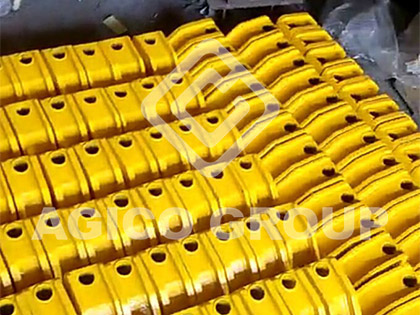
What is Rail Insert Bolt
AGICO supplies common sizes of rail insert bolt products for rail tracks, it can also be customized according to customer’s drawing. A rail insert bolt provides a mechanical connection within a rail track fastening system. Its head, neck, threaded portion and overall length must match the rail fasteners’ design. Usually, the insert bolt works with a ribbed rail tie plate, rail sleeper as a whole set.
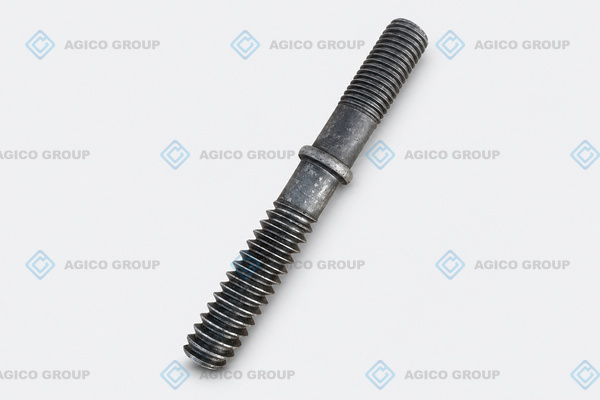
Double ended anchor bolt for concrete sleeper fastening applications
Insert bolt refers to several types of bolts for different places of the rail track, each are designed with different drawing, fastening system, thread and mating parts. Such as HS26 and HS32 references, M22 configurations and longer insertion arrangements provide starting points for a technical inquiry; customer shall select the correct bolt type and dimension according to rail application. Here are the tips for how to decide the insert bolt for your rail project.
Features to Define for Your Rail Track
Head and neck matched to the assembly
The head profile and neck dimensions determine how the bolt seats and is restrained in the sleepers. Confirm them according to the drawing and then choose nominal thread diameter.
Thread and length coordinated with mating parts
Specify nominal diameter, pitch, thread form, threaded length and overall length together. The nut, washer and available assembly space must be checked as a group to establish the required engagement and installation clearance.
Material and mechanical properties specified together
The material grade, property class and heat treatment form one technical specification. A steel designation by itself does not establish the finished bolt’s mechanical properties. Acceptance should follow the agreed product requirements and inspection documents.
Surface finish selected for service conditions
State the finish, coating requirements and thread fit after coating. The selected protection needs to suit the exposure conditions and the fastening assembly without preventing the nut or receiving component from fitting correctly.
Insert Bolt Sizes Chart
The following table covers reference insert bolt families. HS26 and HS32 configurations are separate from the double ended bolt shown in the main image. Confirm the drawing and dimensions for the selected product.
The following sizes are reference configurations for inquiry preparation. Dimensions, drawing notation and unit weights require confirmation before an order is placed.If you need other sizes, please contact AGICO now to check out whether the size can be customized. Send the drawings of insert bolt diameters of 18 mm and 22 mm with lengths from 125 mm to 195 mm for certain sleeper or crane rail fastening designs.
| Reference | Size notation | Nut notation | Reference mass kg |
|---|---|---|---|
| HS26/55 | M22 × 55/40 | M22 / H22 / S39 | 0.450 |
| HS26/65 | M22 × 65/45 | M22 / H22 / S39 | 0.475 |
| HS26/90 | M22 × 90/45 | M22 / H22 / S39 | 0.549 |
| HS32/55 | M22 × 55/40 | M22 / H22 / S39 | 0.469 |
| HS32/65 | M22 × 65/45 | M22 / H22 / S39 | 0.503 |
| HS32/90 | M22 × 90/45 | Confirm with drawing | 0.577 |
| Inserted bolt with nut | M22 × 75 | M22 / S36 / H22 | 0.475 |
| Long inserted bolt with nut | M22 × 175 | M22 / S36 / H22 | 0.780 |
Confirm whether the quoted mass covers the bolt alone or the bolt and nut assembly. Nut dimensions and wrench sizes must also be verified.
Materials and Surface Finishes of Insert Bolt
Insert bolts are commonly made of Q235, 35 and 45 carbon steels, along with alloy steels such as 40Cr, 35CrMo and 42CrMo. The correct choice depends on the required mechanical properties need of the rail track. The following specification items should be confirmed for each order.
| Specification item | What to confirm |
|---|---|
| Mechanical properties | Required property class, applicable test methods and acceptance criteria |
| Material condition | Steel grade, heat treatment and material traceability requirements |
| Surface protection | Finish type, coating thickness where specified and coating inspection |
| Thread acceptance | Thread form, pitch, tolerance and gauge requirements after finishing |
Surface finish options include oiled plain steel, paint, electroplated zinc, hot dip galvanizing, zinc aluminum coatings, zinc diffusion treatments and zinc flake systems. For high strength steel bolts, the coating specification should address any required controls for hydrogen embrittlement.
Where are Insert Bolts Used in Railways
Ribbed Baseplate Fastening Assemblies
HS26 and HS32 references may be used to identify bolts for ribbed baseplate arrangements. Check head and neck geometry, seating dimensions and the associated nut before treating a reference designation as a replacement specification.
Sleeper and Track Slab Assemblies
Insert components may form part of a fastening connection associated with a sleeper or track slab. Establish whether the drawing calls for a metal bolt, a threaded insert or a plastic dowel. Each component has a different interface and acceptance requirement.
Steel Sleeper and Crane Rail Arrangements
For steel sleeper or crane rail projects, match the insert bolt to the actual fastening location. Customer shall comfirm receiving geometry, neck shape, thread and assembly dimensions also influence selection.
Metal Insert Bolt or Plastic Dowel
A metal insert bolt is a fastening component. A plastic dowel is a separate anchoring component that may also provide electrical isolation within a specified fastening system. Where electrical insulation is required, specify and verify the complete fastening arrangement; a metal bolt alone does not provide electrical isolation.
Concrete Sleeper Bolt Fastening Arrangements
Concrete sleeper fastening systems can use different bolt, screw and sleeve arrangements. The following illustrations explain related fastening components and installation principles. They show separate configurations and do not establish interchangeability with the double ended bolt pictured above. Match the selected bolt and anchoring interface to the approved assembly drawing.
Rail Clamping with Insert Bolt
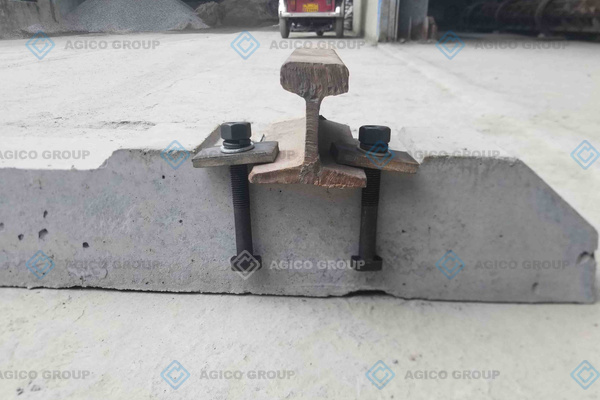
Rail fastening demonstration showing clamps and vertical bolts alongside a rail section
This demonstration shows how bolts and clamps act around the rail foot. The exposed lower bolt ends are visible for demonstration; the picture does not define the hidden anchorage arrangement of the featured double ended bolt.
Rail Screw Bolts with Plastic Sleeves
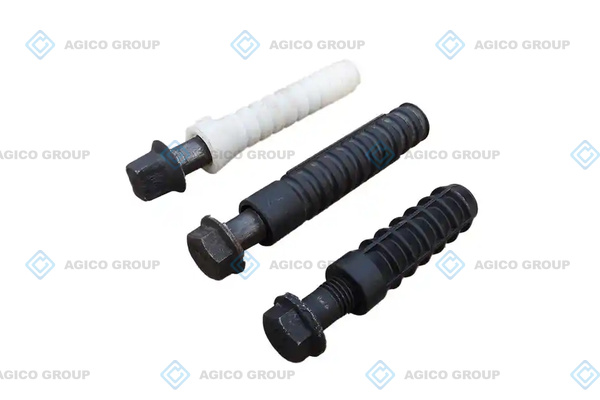
Rail Screw Bolts with ribbed plastic sleeves
These assemblies shows screw bolts used with plastic sleeves. They are a related fastening configuration rather than a direct substitute for the featured double ended bolt. Confirm sleeve geometry, mating thread and any insulation requirements from the complete fastening specification.
Rail Fastening Components in Cross Section

cross section of rail fastening components
The labeled cross section identifies the rail, hex nut, flat washer, spring clip, baseplate, rail pad, fastening bolt, embedded sleeve and concrete sleeper. It illustrates component relationships and is not a dimensioned installation drawing for the featured bolt.
Quality Requirements and Inspection
Customer shall specify the product standard, edition and project drawing in the inquiry. For different countries may include GOST 16017 for inserted bolts and AS 1085.18 for screw spikes and threaded inserts. Confirm the required chemical and mechanical tests and inspection records before ordering.
The inspections may covering dimensions, thread gauging, identification, mechanical testing and coating checks where required. If your project requires certificates, material reports or traceability records, identify their scope before ordering. AGICO can offer product conformity and company certification and other relevant documents for you.
Frequently Asked Questions
Are HS26 and HS32 insert bolts interchangeable
Do not assume interchangeability from an M22 thread or a similar length. Compare the head, neck, seating geometry and all drawing dimensions, and obtain technical approval for the proposed replacement.
Can an insert bolt be supplied with a nut
Specify whether a matching nut is required and confirm its thread, dimensions, mechanical requirements and finish. Reference configurations include bolt and nut arrangements, but the exact set must be defined in the inquiry.
Which coating should be specified
Choose the coating through the project specification and exposure requirements. Confirm coating thickness or performance criteria where applicable, thread compatibility and inspection requirements. A coating description alone does not establish a guaranteed service life.
What is needed when electrical insulation is required
Identify the insulating component and the complete fastening arrangement. Define the electrical test conditions and acceptance requirements separately from the metal bolt’s dimensions and mechanical properties.
Request an Insert Bolt Quotation
Send your insert bolt drawing, fastening system reference and required quantity for technical review. Include the thread, dimensions, material, property class, surface finish and nut requirements to help establish a clearly defined quotation and inspection basis.